WEST KERRY ROOTS · FAMILY HISTORY
Trace Your Ancestors
A name can lead you back to a place.
A family name. A townland. A story carried overseas. Begin your search for West Kerry roots with the details you already know, then build a record one source at a time.
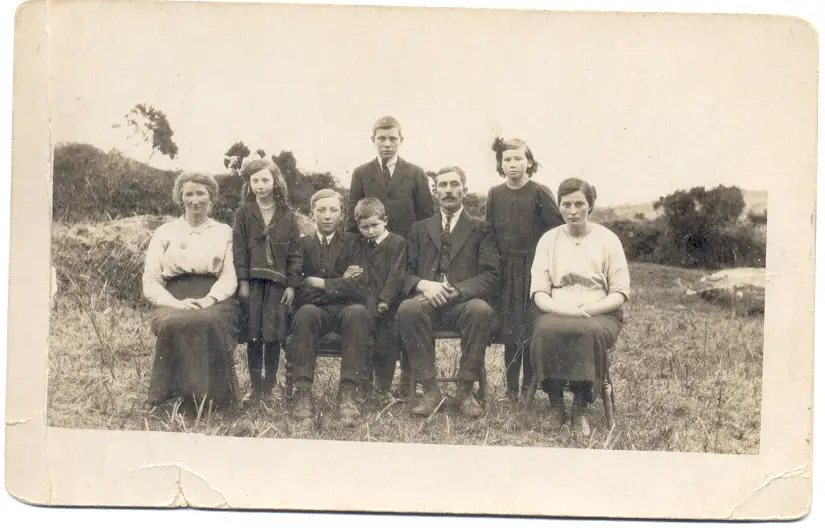
Perhaps your starting point is a photograph, a remembered surname or a place name written in a letter. West Kerry’s family history is also the history of its townlands, parish communities and everyday working lives.
This guide helps you turn those first clues into a careful search, then connect the records with the landscape and local archive.
FROM A FAMILY STORY TO A RECORD
Choose a source for your next clue.
Start with the detail you can support: a name, date, relationship or townland. These official resources provide different pieces of the picture; compare what you find rather than relying on a surname alone.
Births, marriages & parish records
Search IrishGenealogy’s civil and church collections. Check the coverage for your place and dates before assuming a missing result means there was no record.
Explore IrishGenealogy →Read the parish register
The National Library’s Catholic parish register images let you examine the original pages. Identify the relevant parish and check which years survive.
Open the NLI registers →Find a household and its neighbours
Census records can connect names with family relationships and a place. Search by location as well as person, then follow up the details in other sources.
Search the National Archives census →Look beyond the certificates
Kerry Library’s Local History and Archives service is a starting point for local studies enquiries and further sources. Check holdings and visiting arrangements.
Visit Kerry Library’s local history guide →Resource links checked 6 October 2026. Record coverage varies by collection, parish and date.
Parish Records & Graveyards
Start by identifying the parish, denomination and approximate dates relevant to your family. Look for baptism, marriage and burial records, then compare them with civil records and family documents.
For graveyard research around Kilgobban, Killiney, Annascaul and Camp, record the exact place name and check what registers or transcriptions are available before travelling. Photograph inscriptions carefully and note their location and condition.
West Kerry Surnames & Land Records
Search for spelling variations of your family name, including forms with and without O’ or other prefixes. A shared surname alone does not establish a family connection: compare dates, addresses, relatives and occupations.
Sources to explore include Griffith’s Valuation, the Tithe Applotment Books and the 1901 and 1911 census records. Follow the townland as well as the surname, and record spelling variations as you go.
Researching Your Roots
- Write down what is known, including the source of each detail.
- Gather family certificates, letters, photographs and oral accounts.
- Identify a likely townland or parish and a useful date range.
- Compare parish, civil, census and land records.
- Keep copies and references so another researcher can follow the evidence.
- Record uncertainty rather than forcing a match.
Local knowledge & the diaspora
Kerry County Library’s local studies service and relevant archives may help identify further sources. Check each service’s current holdings and access arrangements.
Have a West Kerry family story to contribute? Contact info@westkerry.com. Please avoid sharing private information about living people without their permission.
Explore Kilgobban & Killelton → · Read the valley’s folklore →
RECORDS TELL ONE PART OF THE STORY
Make time for the place itself.
Whether you find a family connection or simply want to understand life in West Kerry, walking the landscape adds another perspective. Brigid’s family-farm walk offers a personal introduction to Gleann na nGealt, its farming life and valley traditions.
The walk is a heritage experience; it does not include genealogical research or a promise of finding relatives.
Discover the Shepherd’s Farm Walk →