Two places near Camp reveal different layers of local history: the church and burial ground at Kilgobban, and the early Christian site at Killelton on the lower slopes above Tralee Bay. Their surviving buildings, inscriptions and archaeological records connect the landscape with parish and family histories.
Kilgobban Church and churchyard
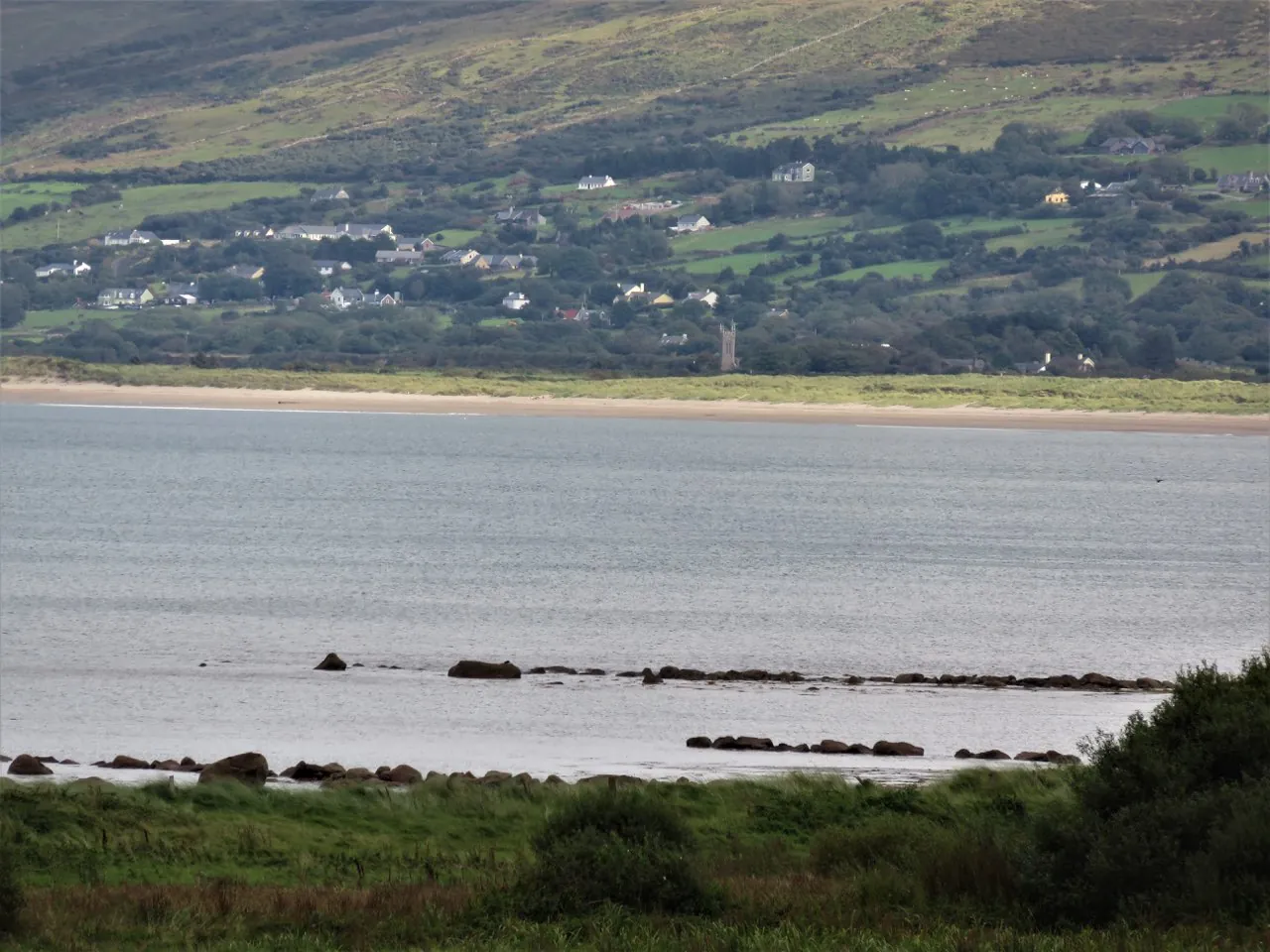
The Church of Ireland building at Ballinknockane is dated 1824 in the National Inventory of Architectural Heritage. Its nave, entrance tower and vestry remain a distinctive landmark overlooking Tralee Bay. The standing church shown here should be distinguished from earlier religious activity associated with the burial ground.
Kerry County Council’s 2011 graveyard survey records named tombs, headstones and many uninscribed grave markers. The oldest inscribed headstone identified in that survey dates to 1816 and commemorates the Butler family. Recording an inscription together with its location can help a family researcher connect a name to a townland.
Sources: architectural inventory and Kilgobbin Graveyard Survey (2011).
Killelton: an early Christian footprint
Killelton, Cill Elton, lies on the lower slopes of Gearhane, about 2.5 kilometres northeast of Camp. Heritage Ireland associates the monastery with Saint Elton, a brother of Saint Fursa, whose mission to Anglo-Saxon England belongs to the early seventh century.
A small stone oratory stands inside a rectangular enclosure. Excavations in 1983 found evidence of an earlier wooden structure, possibly the first church, and foundations of two other rectangular buildings. These traces help explain why Killelton is understood as a monastic site rather than simply an isolated ruin.
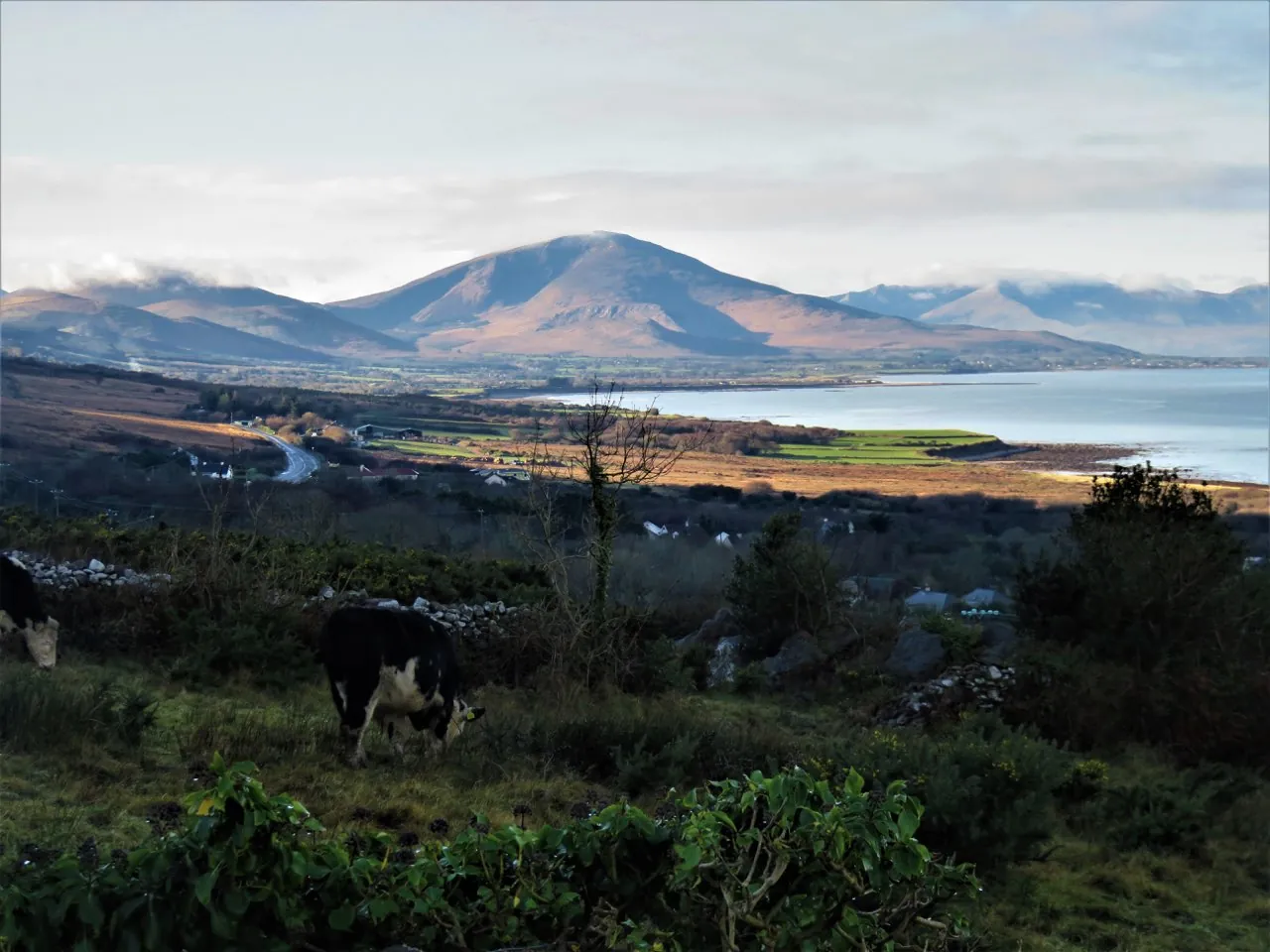
The photograph shows the outlook from Killelton toward Beenoskee and Mount Brandon; those mountains are not the Slieve Mish slopes on which the site stands.
Read the Heritage Ireland site account and the County Kerry archaeological record.
Family names and parish stories
Compare grave inscriptions with parish records, family documents and dated photographs. Keep original spellings, record where each detail came from and distinguish a family recollection from a documentary entry.
Research West Kerry family connections →
Visiting with care
Check access before setting out. Respect private land, working farms, burial grounds and fragile stonework, and leave stones and objects where you find them.
Have a dated photograph, inscription or recollection connected with either site? Email info@westkerry.com with its source and permission to share.